Fat Loss vs Weight Loss: What's the Key Difference?
Most people step on a weighing scale and feel encouraged when they see the number drop by 3–4 kilograms. It feels like progress. Yet the scale only shows total body weight. It does not reveal whether the reduction came from body fat, muscle tissue, water retention, or glycogen stores. This misunderstanding is one of the biggest reasons many people struggle with sustainable fitness results.
The discussion around fat loss vs. weight loss has become more important than ever. Many individuals in India start restrictive diets, detox plans, or aggressive workout programs expecting visible body transformation. The scale moves, but their body composition often remains unchanged. Some even lose valuable muscle mass, which can slow metabolism and make future weight management more difficult.
If your goal is a leaner body, improved metabolic health, better energy levels, and long-term fitness, understanding fat loss vs. weight loss is essential. Although these terms are often used interchangeably, they represent two completely different physiological outcomes.
Why Most People Get Confused Between Fat Loss and Weight Loss
The weighing scale is convenient. It gives instant feedback. The problem is that it cannot distinguish between fat mass and lean body mass. A person who loses water weight after reducing sodium intake may see a lower number within days. Another person may gain muscle through strength training and remain at the same weight despite becoming visibly leaner.
This is why body weight alone rarely tells the complete story.
Several factors can influence daily weight fluctuations:
-
Water retention
-
Salt consumption
-
Digestive contents
-
Hormonal changes
-
Muscle gain
-
Glycogen storage
-
Fat accumulation
Because of these variables, fitness professionals increasingly recommend focusing on body composition rather than scale weight alone.
What is Weight Loss?
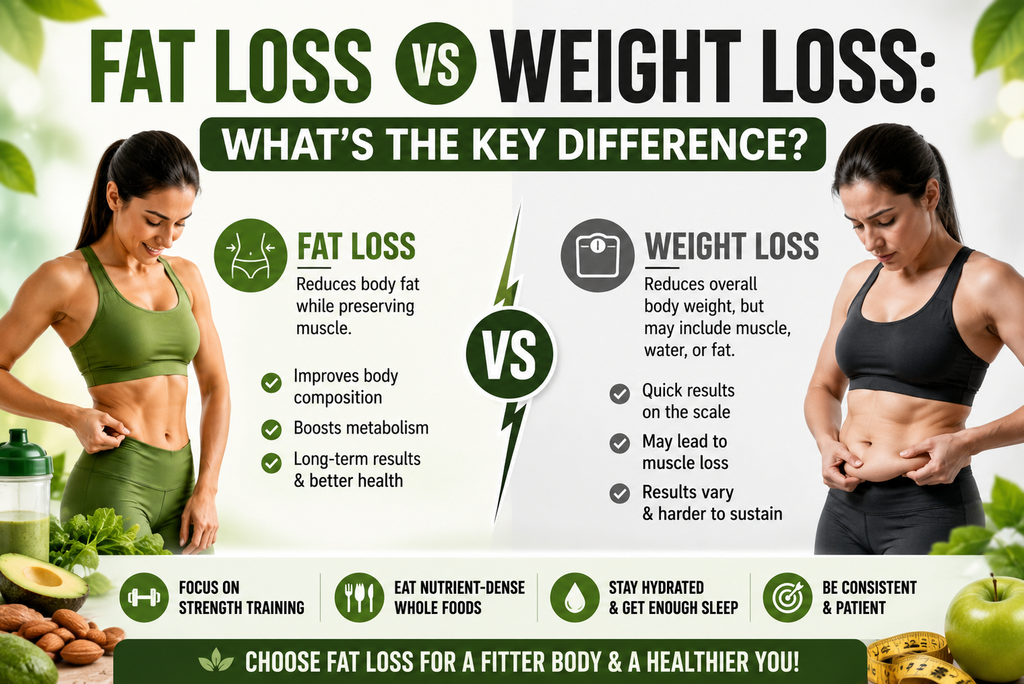
Weight loss refers to a reduction in total body weight. This decrease can result from the loss of fat, muscle, water, or glycogen. Since all of these contribute to body weight, the scale cannot identify which component is being reduced.
Many people pursuing quick results rely on crash diets, meal skipping, detox programs, or excessive cardio sessions. These approaches may produce rapid weight reduction, but the body often sacrifices muscle tissue alongside stored fat.
Weight loss commonly occurs through:
|
Weight Loss Method |
How It Affects The Body |
|
Extreme calorie restriction |
Reduces fat, water, and muscle |
|
Detox diets |
Primarily reduces water weight |
|
Prolonged fasting |
May increase muscle breakdown |
|
Excessive cardio |
Can contribute to muscle loss without adequate nutrition |
|
Low-carbohydrate diets |
Initially reduces glycogen and water |
The challenge appears later. Since muscle tissue burns calories even while resting, losing muscle can reduce resting metabolic rate. As metabolism slows, maintaining weight loss becomes increasingly difficult.
This is one reason many people experience rapid weight regain after ending restrictive diets.
What is Fat Loss?
Fat loss refers specifically to the reduction of adipose tissue (body fat storage tissue) while preserving lean muscle mass. Unlike traditional weight loss, fat loss focuses on changing body composition rather than simply reducing scale numbers.
During fat loss, the body uses stored fat as an energy source through a process called lipolysis (fat breakdown for energy production). The stored fat is converted into fatty acids and glycerol, which are then utilized to meet energy demands.
A person focused on fat loss may not see dramatic changes on the scale every week. Yet they often notice the following:
-
Better muscle definition
-
Smaller waist circumference
-
Improved clothing fit
-
Increased strength levels
-
Better athletic performance
-
Higher energy levels
This is why many fitness coaches consider fat loss a more meaningful health indicator than weight loss.
Fat Loss vs Weight Loss: Key Differences
Understanding fat loss vs weight loss becomes easier when comparing the two side by side.
|
Aspect |
Weight Loss |
Fat Loss |
|
Meaning |
Reduction in total body weight |
Reduction in stored body fat |
|
Includes |
Fat, muscle, water, glycogen |
Primarily body fat |
|
Goal |
Lower scale number |
Better body composition |
|
Muscle Preservation |
Often compromised |
Prioritized |
|
Metabolic Impact |
May slow metabolism |
Supports metabolic health |
|
Physical Appearance |
Smaller body size |
Leaner and more defined physique |
|
Sustainability |
Often temporary |
More sustainable long-term |
|
Health Outcome |
Variable |
Usually more favourable |
The most important distinction between fat loss vs weight loss is that fat loss improves the ratio between fat mass and muscle mass, whereas weight loss simply reduces total body weight.
Why Fat Loss Matters More For Long-Term Health
Excess body fat is associated with multiple health concerns, including insulin resistance, type 2 diabetes, high blood pressure, fatty liver disease, hormonal imbalances, and cardiovascular complications. Reducing body fat can lower these risks while supporting overall wellbeing.
Muscle preservation matters equally. Since muscle contributes significantly to daily calorie expenditure, maintaining lean tissue helps support healthy metabolism and long-term weight management.
Research also shows that aggressive dieting can lead to substantial muscle loss. In some cases, individuals losing 10 kilograms of body weight may lose 3–4 kilograms of muscle tissue. This creates a metabolic disadvantage that often contributes to the well-known weight regain cycle.
How to Achieve Fat Loss Without Losing Muscle
The goal should not be rapid weight reduction. The goal should be sustainable body recomposition.
Maintain a Moderate Calorie Deficit
A deficit of approximately 300–500 calories below daily energy requirements can encourage steady fat reduction while minimizing muscle loss. Aggressive deficits often increase the risk of metabolic adaptation and muscle breakdown.
Increase Protein Intake
Protein supplies amino acids (muscle repair building blocks) required to maintain lean tissue during calorie restriction.
Good protein sources include:
-
Paneer
-
Eggs
-
Fish
-
Chicken breast
-
Greek yogurt
-
Lentils
-
Tofu
-
Whey protein
Include Resistance Training
Strength training sends a signal that muscle tissue is necessary. Because of this stimulus, the body is more likely to preserve muscle while utilizing stored fat for energy.
Aim for resistance training sessions three to five times per week alongside regular physical activity.
How to Measure Fat Loss Accurately
Tracking fat loss requires more than checking body weight. Several practical methods can provide a clearer understanding of body composition changes.
Measurement Tape
Tracking waist, hip, thigh, chest, and arm measurements every week can reveal meaningful progress that the scale may miss. A reduction in waist circumference often indicates successful fat loss.
Waist-to-Hip Ratio (WHR)
WHR is calculated by dividing waist circumference by hip circumference. It helps assess abdominal fat distribution and obesity-related health risks.
Progress Photos
Consistent photographs taken under similar lighting conditions often reveal physical changes more accurately than daily scale readings.
Technical Methods
|
Method |
Purpose |
|
BIA (Bioelectrical Impedance Analysis) |
Estimates body fat, muscle mass, and body water |
|
DEXA Scan |
Measures fat mass, lean tissue, and bone density |
|
Skinfold Calipers |
Estimates subcutaneous fat levels |
|
Body Composition Scanners |
Tracks changes in fat and muscle distribution |
Can You Lose Fat Without Losing Weight?
Yes. This process is commonly called body recomposition.
For example, a person may lose 5 kilograms of body fat while gaining 5 kilograms of muscle mass. The scale remains unchanged, yet the body looks noticeably different. Clothes fit better, waist measurements decrease, and muscle definition becomes more visible.
This is another reason why fat loss vs. weight loss should never be evaluated using scale numbers alone.
What This Means for the Weight Management Industry
Consumer awareness around body composition is growing rapidly across India. Buyers are increasingly seeking science-backed products that support healthy fat management rather than temporary water-weight reduction.
This shift has influenced the entire manufacturing of the weight management sector. Modern consumers want formulations that align with balanced nutrition, exercise, and sustainable wellness goals.
A reliable weight loss supplement manufacturer now focuses on ingredient transparency, evidence-based formulations, and long-term weight management support. Similarly, companies involved in weight loss supplement manufacturing are investing in advanced research to meet rising demand for clinically supported nutrition products.
The same trend is shaping the fat-burning supplement manufacturing industry, where consumer preference is shifting toward products that support healthy metabolism, appetite management, body fat reduction, and overall wellness.
Final Thoughts
The scale tells you how heavy you are. It does not tell you how healthy you are.
Understanding fat loss vs. weight loss changes the way you measure progress. Weight loss focuses on reducing total body weight. Fat loss focuses on reducing stored body fat while protecting valuable muscle tissue.
A slower-moving scale does not mean failure. If your waist circumference is shrinking, your strength is improving, and your body composition is changing, you are moving in the right direction.
For lasting results, focus less on scale numbers and more on preserving muscle, improving nutrition, maintaining an active lifestyle, and reducing excess body fat. That approach supports better health, stronger metabolism, and sustainable weight management for years to come. Shop for natural weight loss supplements at Solluna.
Related post
03
Jul